There's Maggots In My Cheese
Have you ever thought about bugs when biting into your favorite cheese? Probably not! But in some cheeses, these tiny creatures play a crucial role.

Daniel Defoe in his 1724 work A Tour thro' the Whole Island of Great Britain notes, "We pass'd Stilton, a town famous for cheese, which is call'd our English Parmesan, and is brought to table with the mites or maggots round it, so thick, that they bring a spoon with them for you to eat the mites with, as you do the cheese."

From the British Film Institute: “Cheese Mites was the sensation of the first public programme of scientific films in Britain shown at the Alhambra Music Hall in Leicester Square, London, in August 1903. Its claim to being scientific lay in its being shot through a microscope, revealing to a lay audience sights that would normally only have been available to owners of microscopes. The context of its showing was typical of early cinema, where films were part of a culture of spectacular entertainments which served eager audiences keen to witness the latest novelty. In this case they squirmed in mock revulsion at the greatly enlarged creatures scampering around on the screen
While enjoying cheese with bugs is not something we are often familiar with today, there are still cheese makers in the world that employ the process of using insects to create unique flavors and effects on their cheeses. Here are just a few:
Mimolette (France)
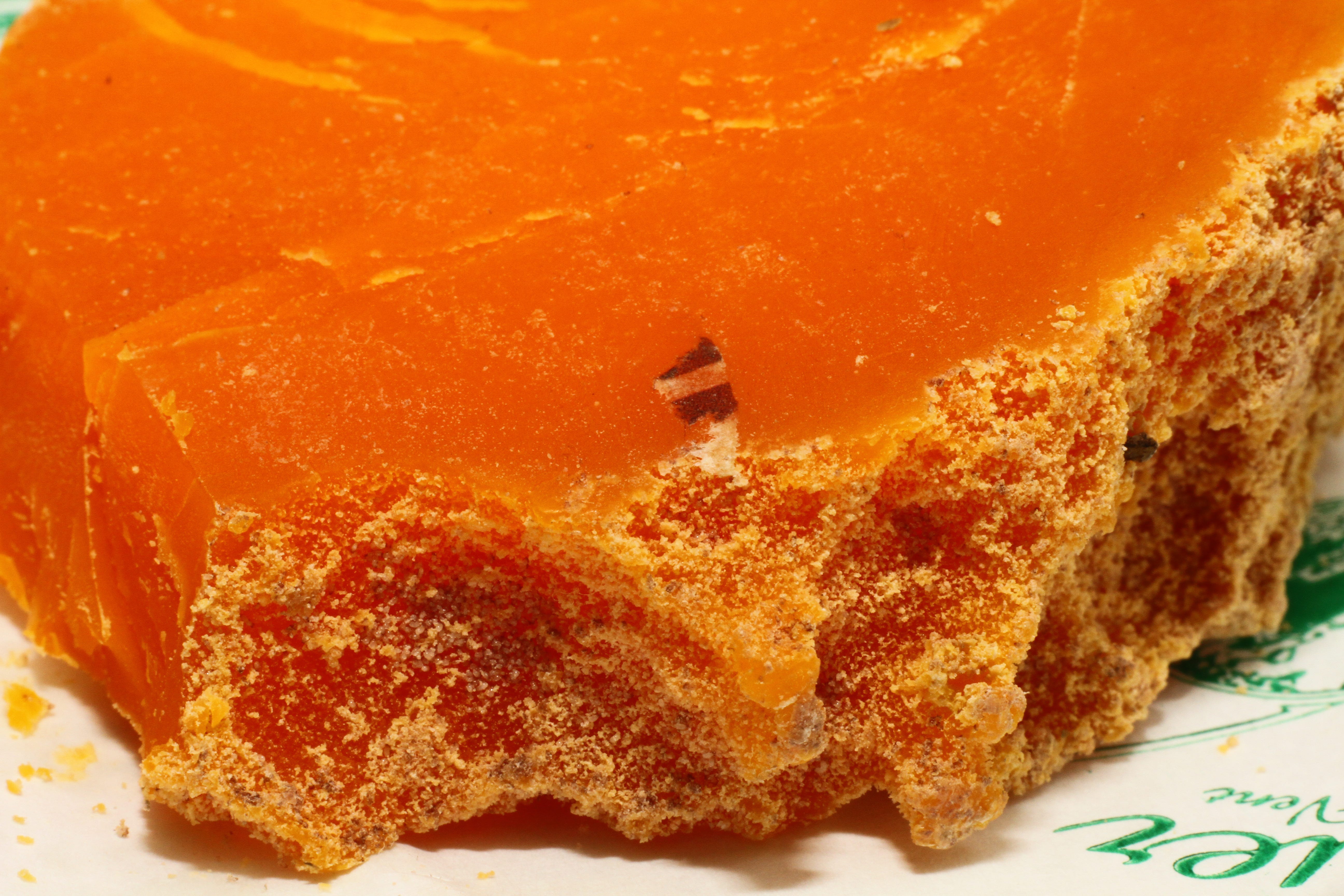
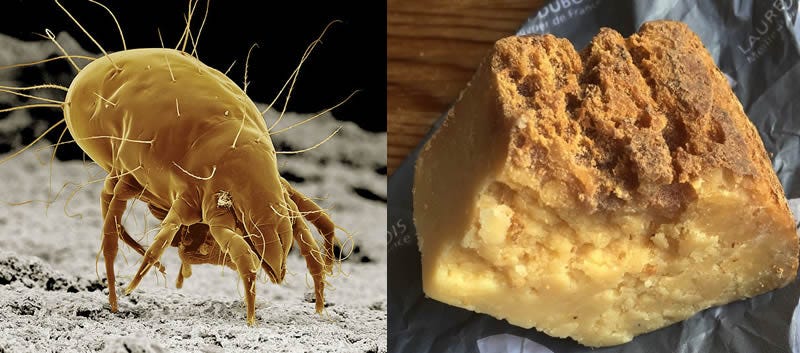
The cheese-making process begins traditionally, with cow's milk being curdled and pressed. What sets Mimolette apart is its aging process. Once the initial stages of cheese-making are complete, cheese mites are introduced to the cheese's surface. These tiny arachnids nibble away at the hard crust, influencing the cheese's texture and imparting a unique flavor profile. As they consume the outer layer, they leave behind a characteristic cratered surface that distinguishes Mimolette from other cheeses. The presence of these mites accelerates the cheese's aging process, deepening its flavors. Before Mimolette reaches consumers, most of the mites are brushed off, but the craters and pockmarks, a testament to their role, remain evident. The cheese offers a nutty and tangy flavor, a direct result of the mites' activity.
Casu Marzu (Sardinia, Italy):
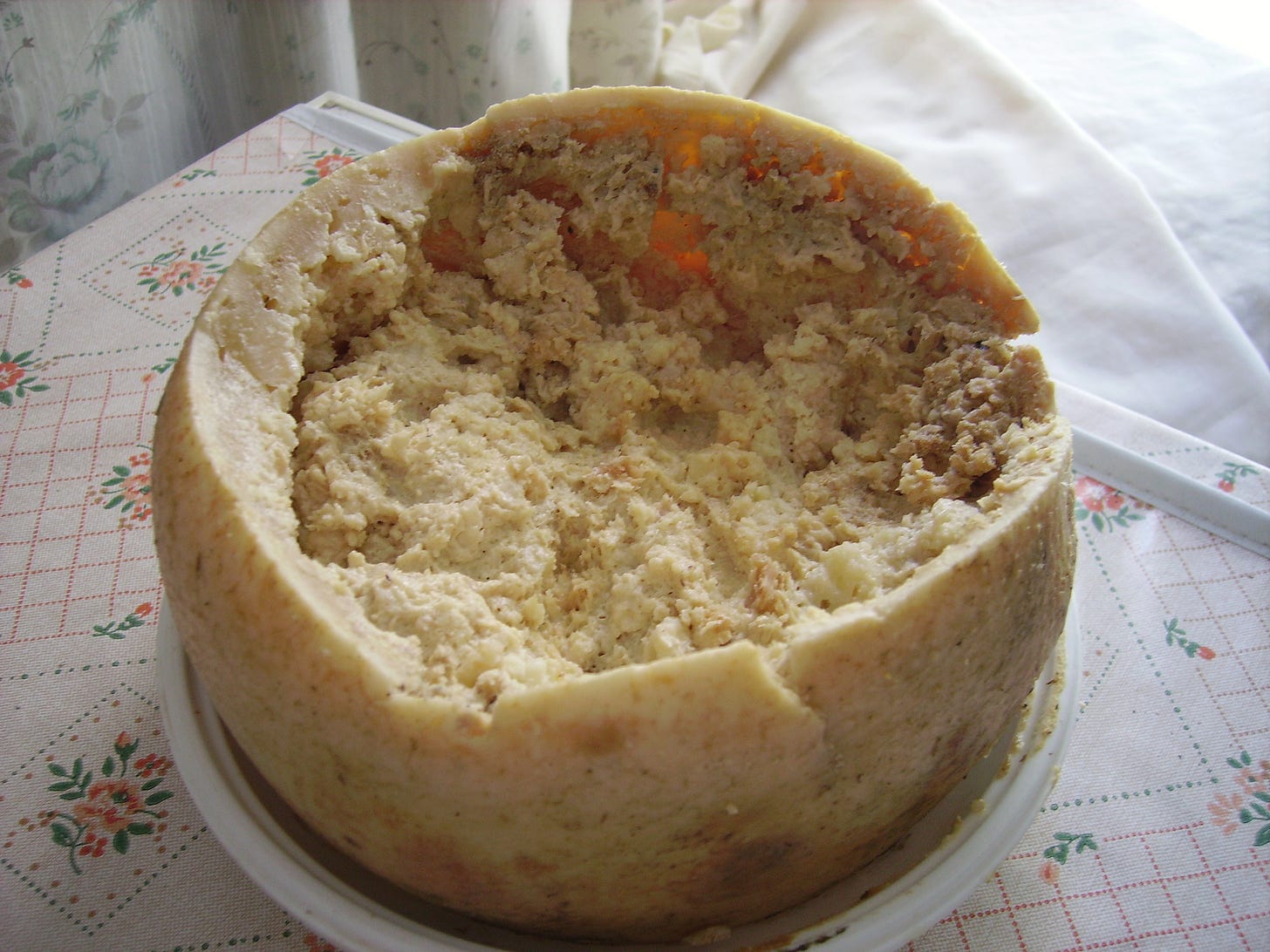
Derived from pecorino, casu martzu goes beyond typical fermentation to a stage of decomposition, brought about by the digestive action of the larvae of the cheese fly of the Piophilidae family. The texture of the cheese becomes very soft, with some liquid (called "làgrima", Sardinian for "teardrop") seeping out. The larvae themselves appear as translucent white worms, roughly 8 mm (5⁄16 in) long.
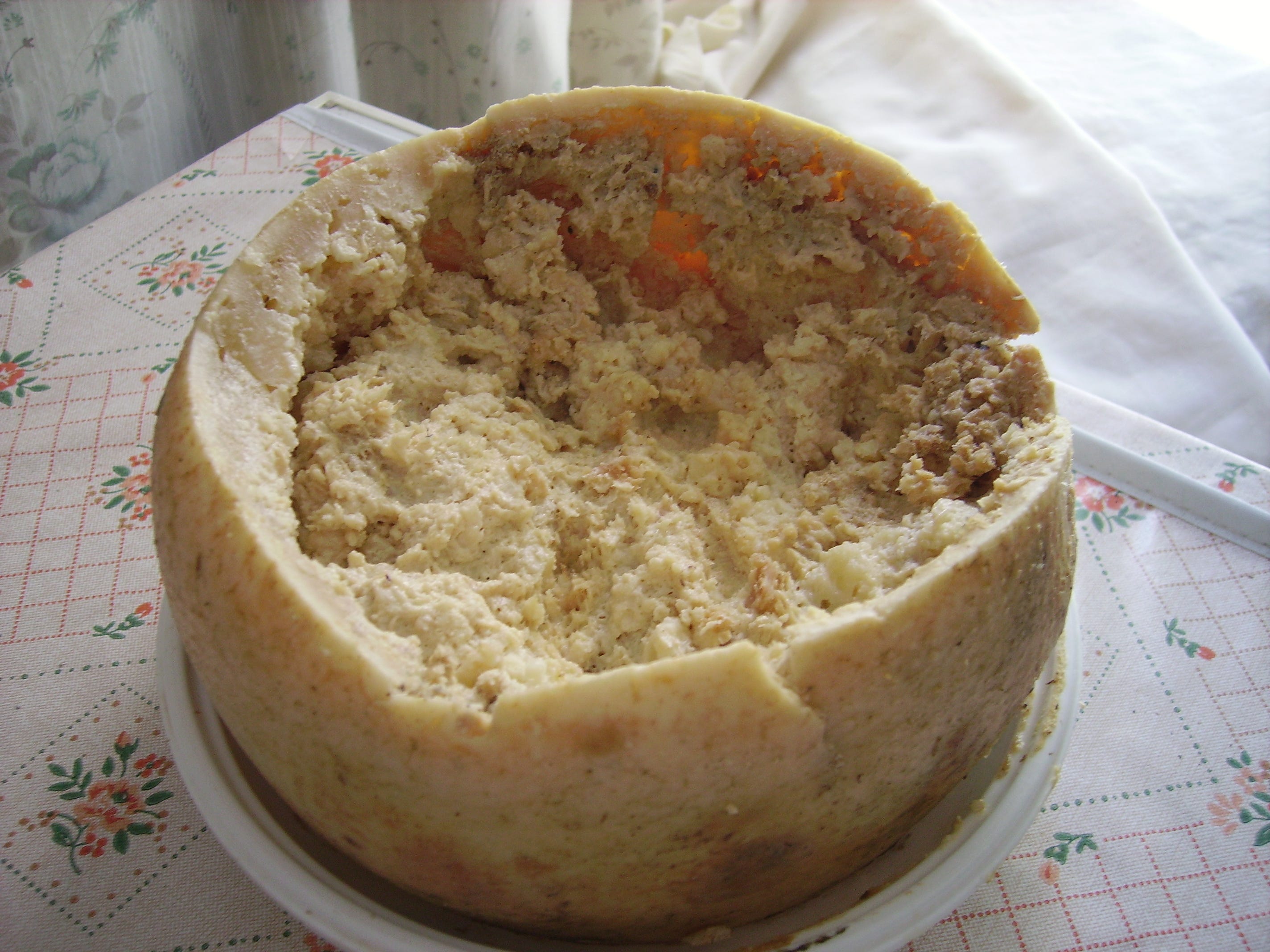
An indigenous delicacy from the Italian island of Sardinia, Casu Marzu translates to "rotten cheese," a hint at its unique production method. The process begins with Pecorino Sardo, a sheep's milk cheese. Once the initial maturation is complete, the cheese's crust is cut off to allow the eggs of the Piophila casei fly to be laid inside. These eggs hatch into larvae, which begin consuming the cheese. Their digestive action breaks down the cheese's fats, making the texture very soft and spreadable. Their activity also enhances the fermentation of the cheese, producing a pungent aroma and a tangy, peppery flavor. The old men love it, but the bugs can survive and live in the intestine track.
When served, it's crucial to shield one's eyes when eating, as the maggots can jump! The presence of the wriggling larvae is considered an integral part of the Casu Marzu experience, adding both to the texture and the flavor. However, consumption requires caution. If the larvae are dead upon serving, the cheese is considered unsafe to eat. Some enthusiasts recommend placing the cheese in a sealed paper bag before consumption. As the maggots deplete their oxygen supply, they jump in the bag, creating a "pitter-patter" sound. Like a bag of popcorn, as the pitter patter tapers off the time to consume has arrived.

Milbenkäse (Germany): Also known as "mite cheese," this is a German specialty. The cheese is made by allowing quark (a type of fresh dairy product) to mature and dry in wooden boxes, where cheese mites are introduced. These mites consume the surface of the cheese, and their enzymatic activity contributes to the cheese's maturation, giving it a distinct taste.
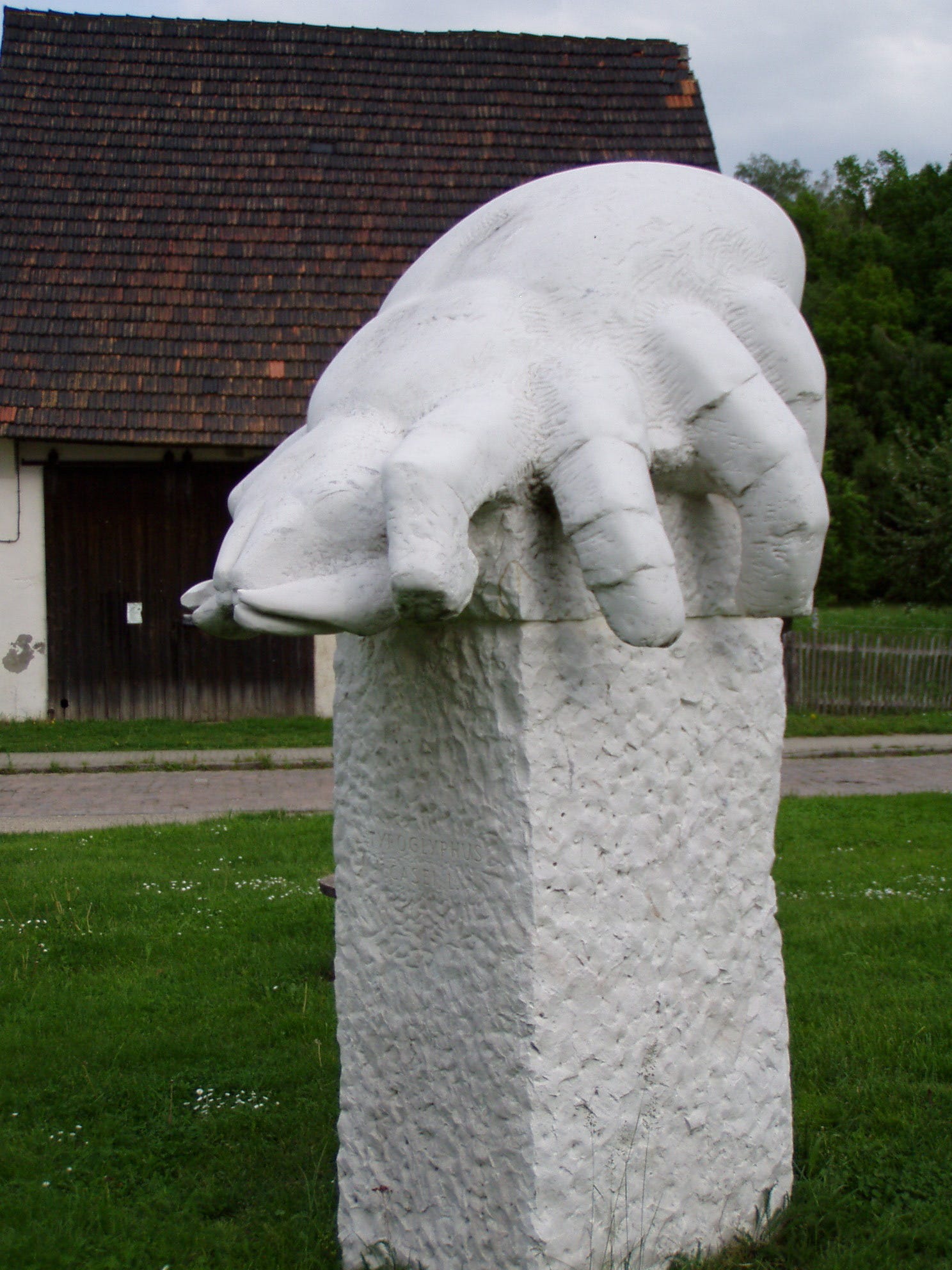
Traditional Cheddars (UK): While not intentionally infested with mites, traditional cloth-bound cheddar cheeses sometimes develop cheese mites on their surfaces. These mites can contribute to flavor development. Some cheesemakers even brush the mites off periodically during the aging process to control their influence on the cheese's final taste.
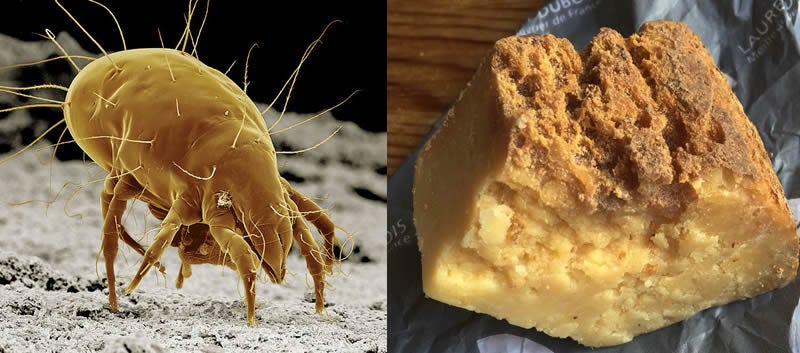
Delicious Cheese Mites Make Neat Work Of Hunks of Mouth Watering Chedder Left Out For Too Long Pule Cheese (Serbia): While this cheese doesn't use insects in its production, it's worth noting because of its unique source. Pule is a Serbian dairy product made exclusively at the Zasavica Special Nature Reserve from the milk of Balkan donkeys. While not involving bugs directly, the labor-intensive process, including manual milking and a specific diet for the donkeys, makes it one of the most expensive cheeses globally. There are about only 120 donkeys that make this cheese and they only live in the Zasavica Reserve, Sremska Mitrovica, Serbia
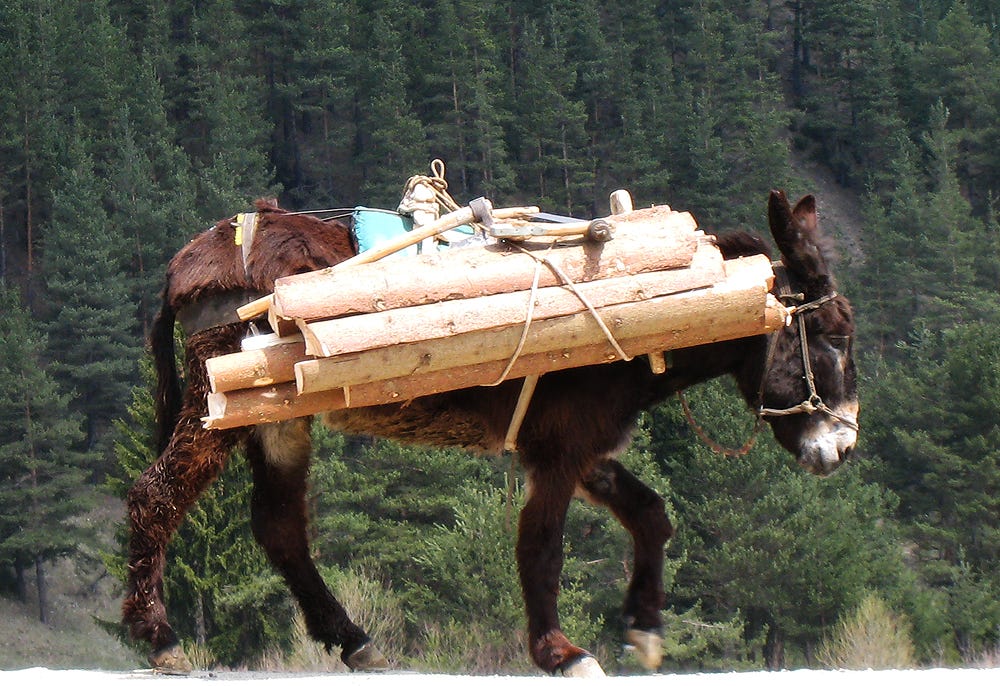
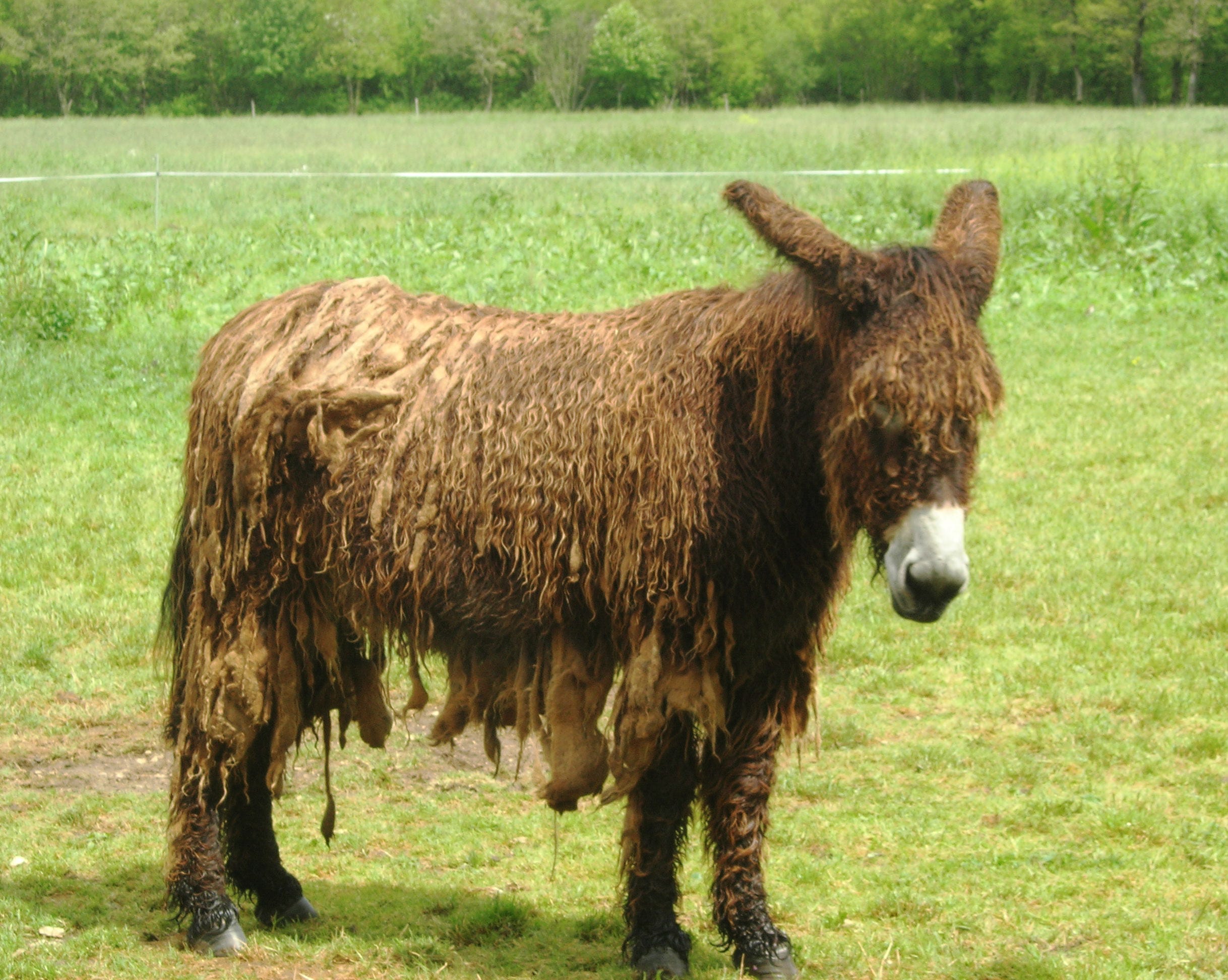
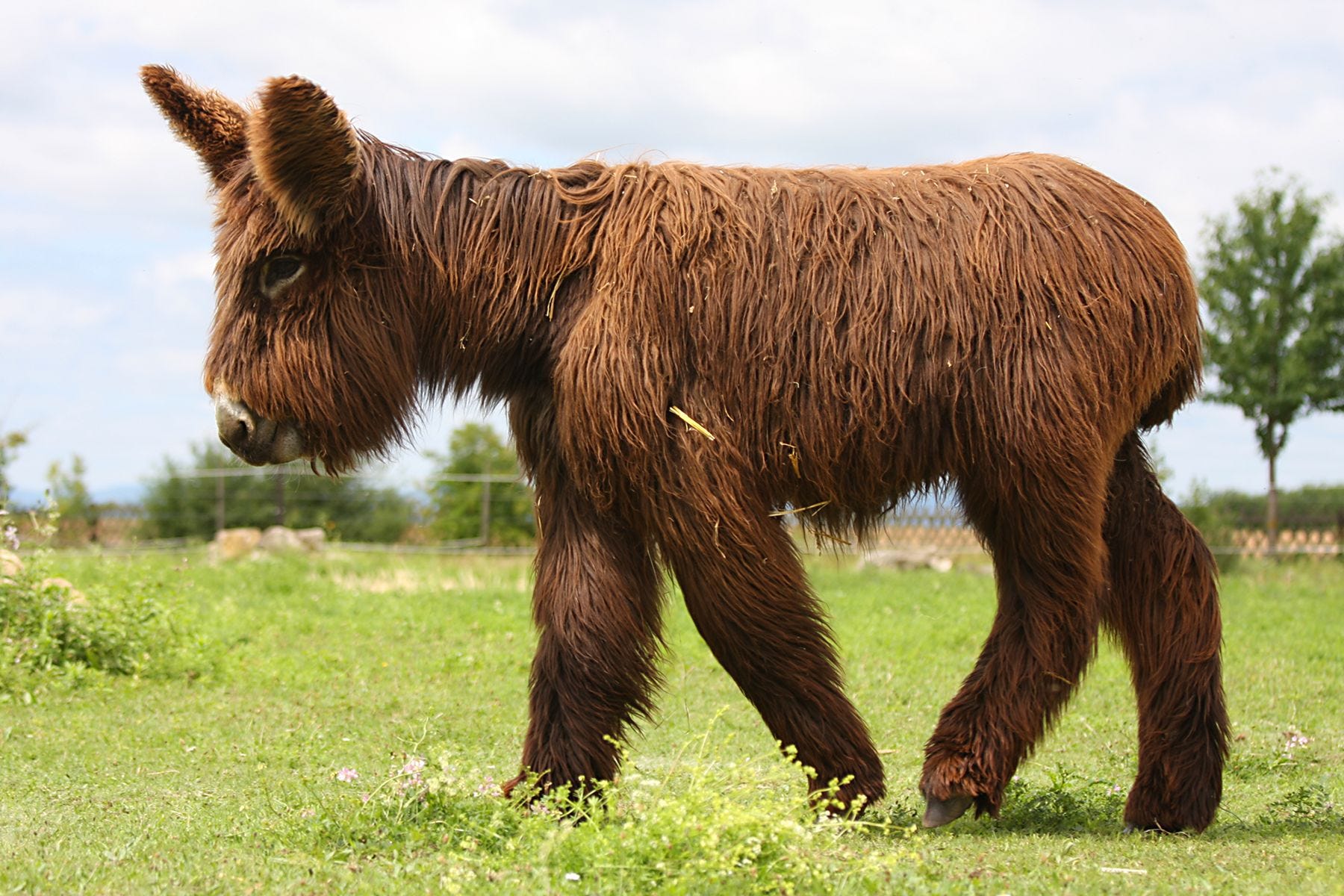
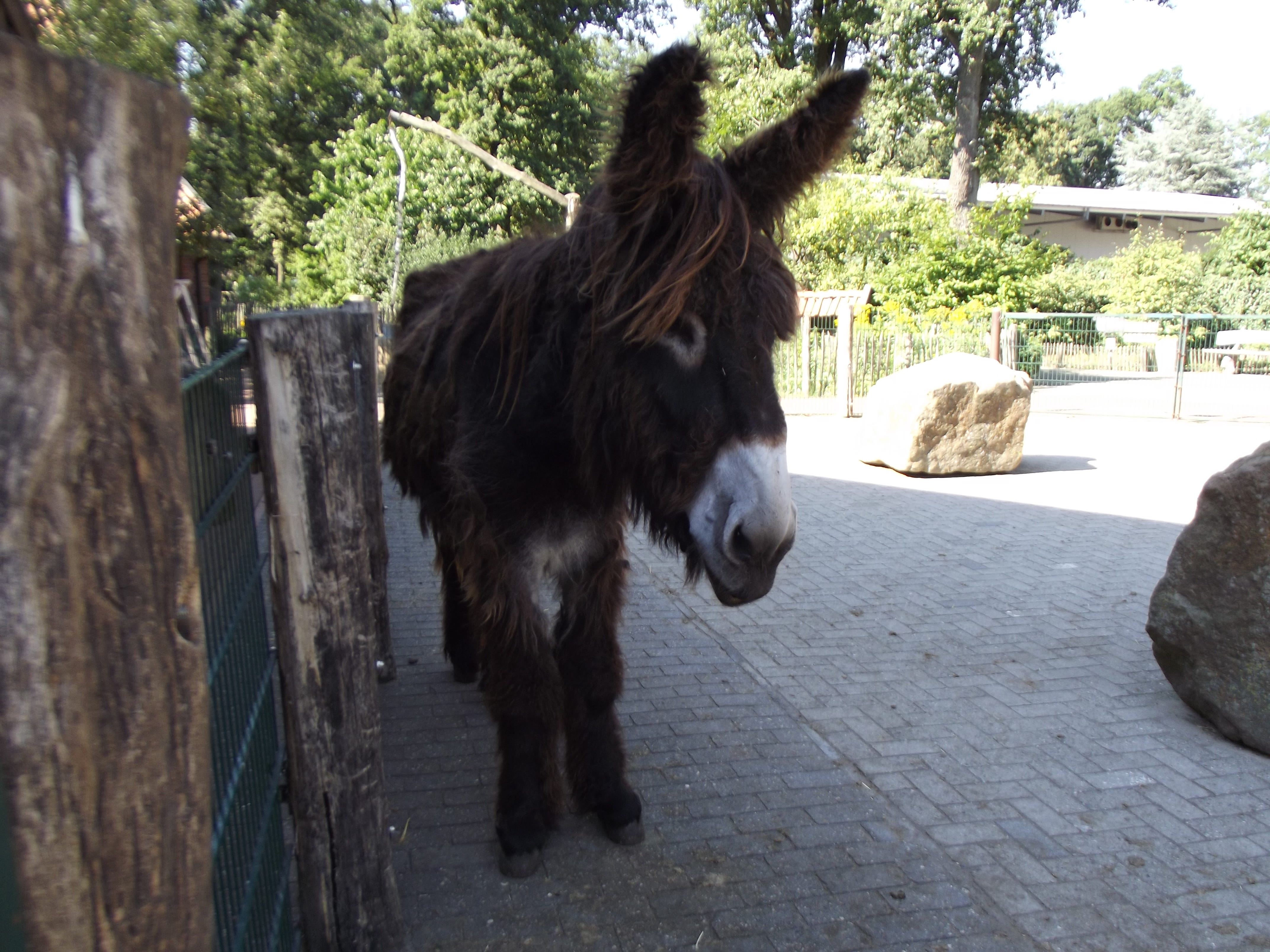
Baudet du Poitou: While not a cheese at all, the baudet du Poitou, or Poitou Ass is a donkey breed from the Poitou region in France. It is distinct for it size, as one of hte largest donkey breeds, as well as for its long coat that can hang off in curls or even form dreads.
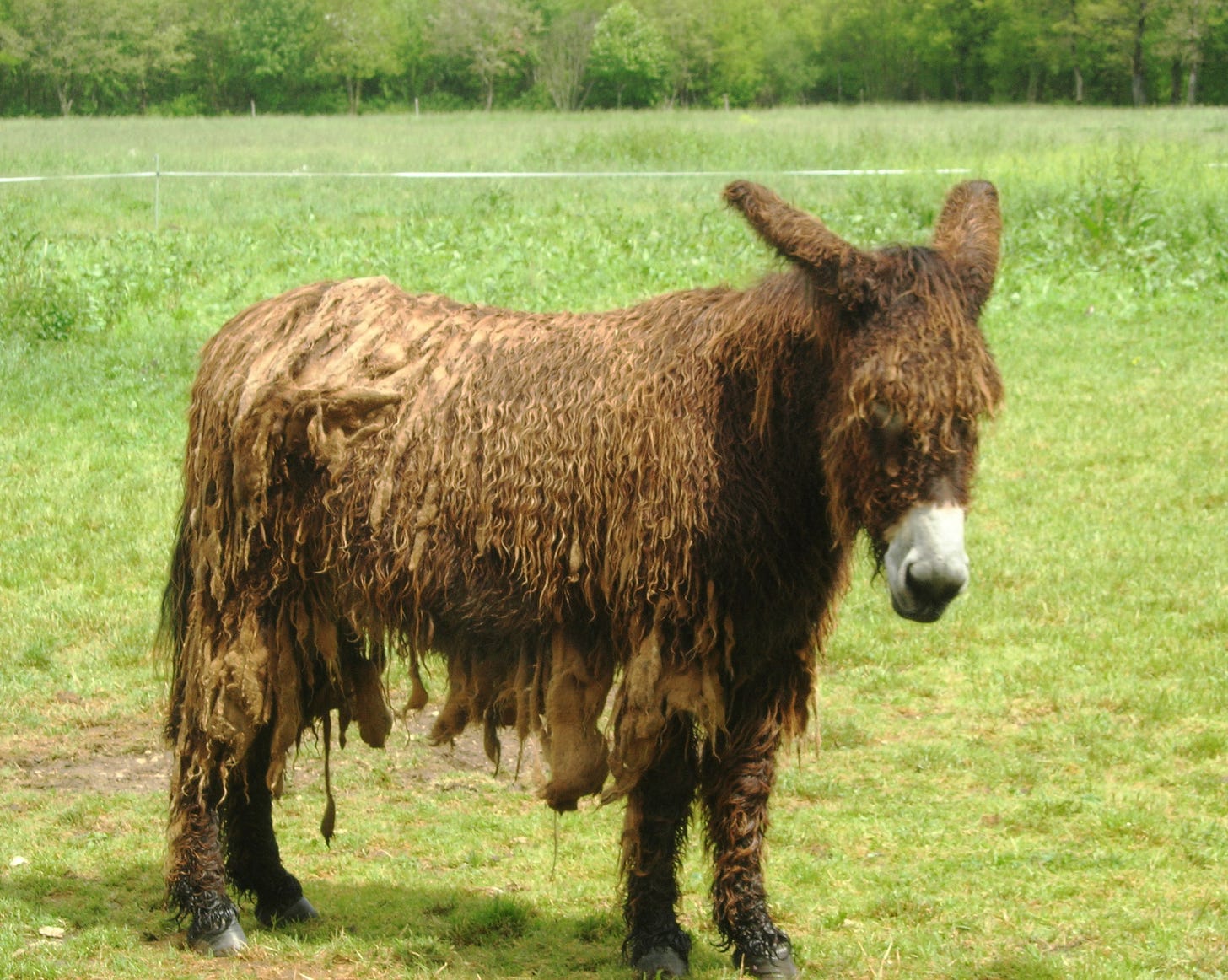
How does she even see!? Did you know the root of the French word for cute (mignon) is the same as the root of our word minion? Says a lot, doesn’t it? ;) 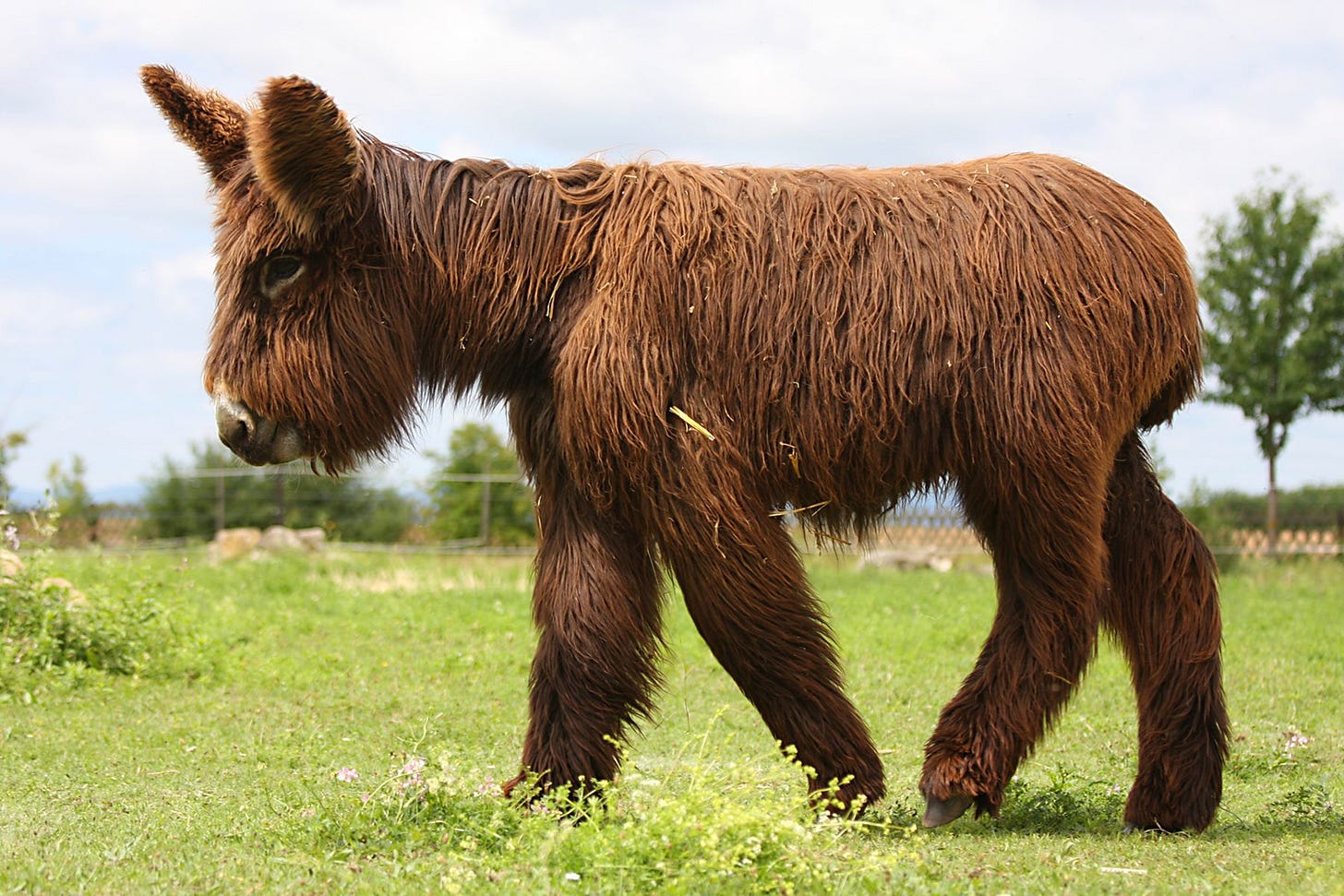
This one looks magical. Like it is a a benevolent sprit creature in a Miyazaki film. 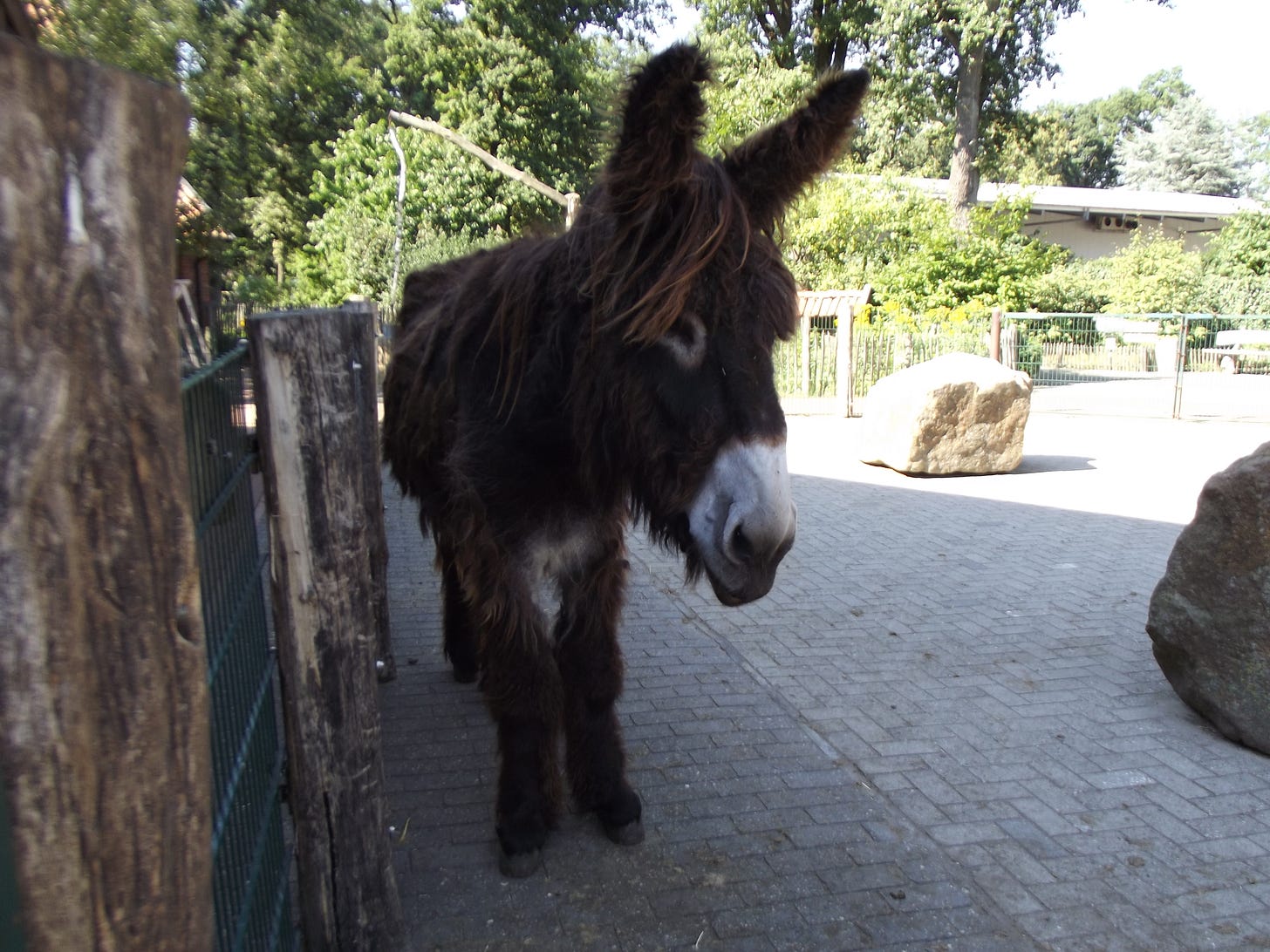
This one says ‘have a nice day'.